
Sewage Cleanup and Restoration
in Boca Raton
Sewer backups, septic failures, and Category 3 contaminated water — extracted, disinfected, and restored by a certified team with biohazard training and the PPE to handle what no homeowner should touch.
A sewage backup in your Boca Raton home is not just water damage — it is a biohazard event. Raw sewage carries bacteria including E. coli and Salmonella, viruses including hepatitis A and norovirus, parasites, and chemical contaminants that pose immediate health risks to everyone in the structure. The moment sewage enters your living space, every surface it contacts becomes contaminated, every porous material it touches must be removed, and the air quality in the structure is compromised until professional remediation is complete.
Boca Raton’s municipal sewer infrastructure, aging septic systems in unincorporated areas, and the flat terrain that makes gravity-based drainage unreliable all contribute to a sewage backup rate that keeps our team responding to these calls year-round. This page covers every aspect of sewage cleanup in Boca Raton: the causes specific to our area, the Category 3 water protocols that govern the restoration, the health risks you need to understand, the insurance coverage that applies (and the endorsement most homeowners do not realize they need), and the neighborhood factors that affect your risk.
What Causes Sewage Backups in Boca Raton Homes
Sewage enters homes through predictable failure points, and Boca Raton’s geography, climate, and infrastructure create conditions that make several of these failures more common here than in most of the country.
Municipal Sewer System Overload
Boca Raton’s municipal sewer system serves the majority of the city, but the system faces capacity challenges during heavy rain events. South Florida’s flat terrain means sewage systems rely heavily on lift stations (pump stations) rather than gravity. When a lift station loses power during a storm, or when stormwater infiltrates the sewer system through aging pipe joints and manholes, the system can become overwhelmed. The result: sewage backs up through the lowest drain in your home, typically a ground-floor toilet, shower drain, or floor drain in the garage.
This type of backup is most common during hurricane season and heavy summer thunderstorms, when high rainfall volumes coincide with the highest infiltration rates. Properties at the low points of the sewer system — particularly in older Boca Raton neighborhoods like Boca del Mar, Boca Pointe, and areas near Palmetto Park Road — are most vulnerable because sewage flows downhill to the lowest connected point before it backs up.
Lateral Line Blockages
The sewer lateral — the pipe connecting your home to the municipal main — is your responsibility as the property owner, and it is the most common failure point in Boca Raton sewage backups. In our area, lateral line blockages happen for three primary reasons:
Tree root intrusion. Boca Raton’s tropical landscaping — ficus, banyan, royal palm, and coconut palm root systems — aggressively seeks moisture. Roots enter sewer laterals through joints, cracks, and connection points, gradually restricting flow until a complete blockage forms. Root intrusion is particularly common in properties with large, mature trees near the sewer line path, which is typical in established Boca Raton neighborhoods with 30+ year landscaping.
Pipe deterioration. Sewer laterals in Boca Raton homes built before 1990 may be cast iron, clay, or Orangeburg (compressed tar paper). Cast iron corrodes from the inside in South Florida’s high-mineral water environment. Clay joints separate as the sandy soil shifts. Orangeburg collapses as the tar paper degrades. All three create blockages, restrictions, and backflow conditions. Homes in Boca Bayou, Yacht & Racquet Club, and other 1970s–80s communities are in the highest-risk category for lateral line failure.
Grease and debris accumulation. South Florida’s warm temperatures keep cooking grease in a semi-liquid state longer than northern climates, allowing it to travel further into the sewer lateral before solidifying. Over years, grease combines with soap residue and non-flushable materials to form blockages in the lateral. This is a gradual failure that often presents as increasingly slow drains before culminating in a full backup.
Septic System Failures
While most of Boca Raton is served by municipal sewer, some properties in unincorporated areas west of the city, near the Loxahatchee Wildlife Refuge, and in certain older pockets still rely on septic systems. Boca Raton’s high water table creates unique challenges for septic systems: when the water table rises during wet season, the drain field cannot absorb effluent, and sewage backs up into the home through the lowest fixtures. Septic failures in high-water-table areas produce the same Category 3 contamination as municipal sewer backups and require identical restoration protocols.
⚠ Warning
Sewage backup is a biohazard. Do not attempt cleanup yourself. Do not walk through sewage water without waterproof boots and gloves. Do not use household fans to dry sewage-affected areas — this spreads contaminated particulates throughout the home. Keep children, elderly residents, and immunocompromised individuals out of the structure until professional remediation is complete.
Homeowners Ask
Is sewage backup covered by my homeowners insurance in Florida?
Not automatically. Standard Florida homeowners policies exclude sewer and drain backup unless you have purchased a specific sewer backup endorsement (sometimes called a water backup endorsement). This endorsement typically costs $50–$150 per year and provides $5,000–$25,000 in coverage for sewage-related damage. Many Boca Raton homeowners have this endorsement and do not realize it — and many who need it do not have it. Check your policy’s endorsement page before you need it. If you do have the endorsement, file your insurance claim immediately when a backup occurs and document everything before any cleanup begins.
The Sewage Cleanup Process: Category 3 Water Protocols
Sewage cleanup follows the strictest restoration protocols in the industry. Every step is governed by IICRC S500 standards for Category 3 water and OSHA regulations for biohazard exposure. Here is the complete process our team follows for every sewage backup in Boca Raton.
Phase 1: Containment and Safety (Hours 0–2)
Isolating the Contamination Zone
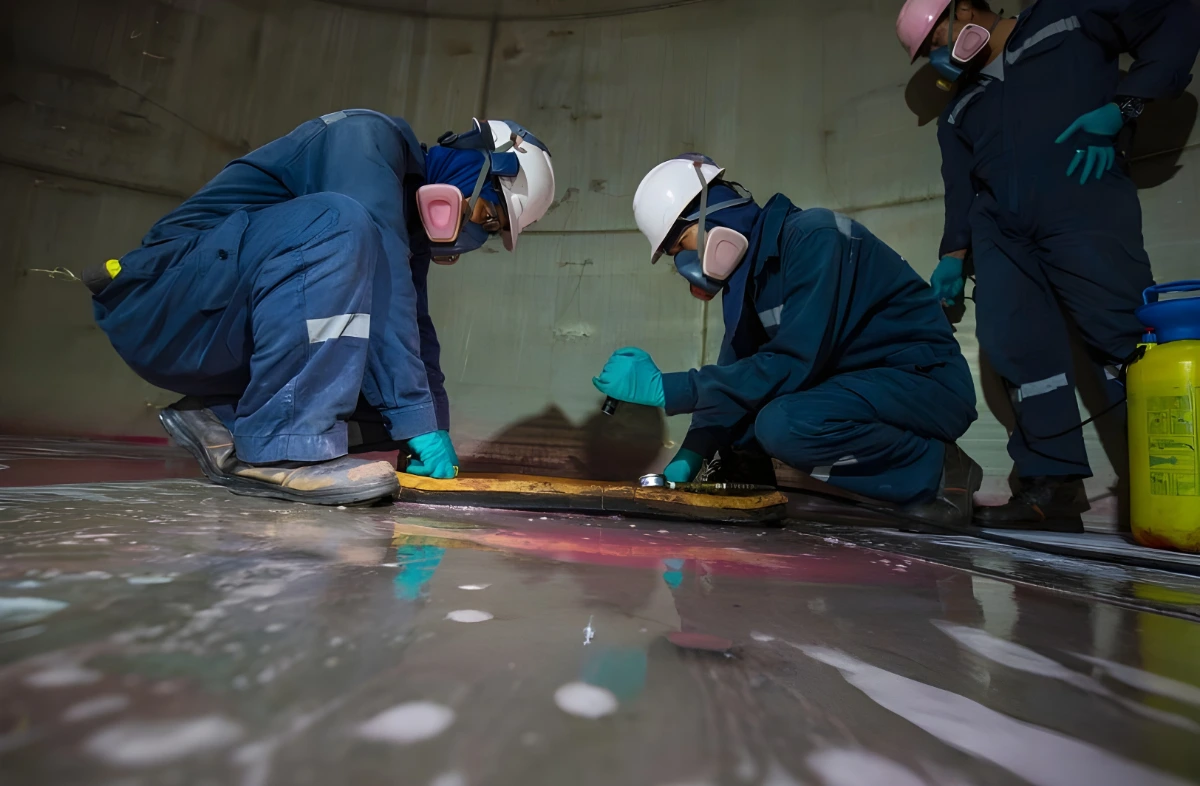
Before any extraction begins, we establish containment barriers to prevent contaminated water from spreading to unaffected areas of the home. HVAC systems are shut down to stop the air handler from distributing contaminated air through the ductwork. Negative air pressure is established in the affected zone using HEPA-filtered air scrubbers, drawing air into the contaminated area rather than allowing it to flow out. All technicians working in the containment zone wear full PPE: Tyvek suits, nitrile gloves, waterproof boot covers, and P100 respirators.
Phase 2: Extraction and Gross Removal (Hours 1–4)
Removing Contaminated Water and Solid Waste
Sewage water is extracted using truck-mounted extraction systems equipped for contaminated water handling. Unlike clean water extraction, sewage extraction requires equipment with sealed waste tanks and decontamination capabilities. Solid sewage material is removed and disposed of as biohazard waste per Florida DEP regulations. All extracted water is disposed of through approved sanitary sewer connections — it cannot be discharged into storm drains or onto grade.
Phase 3: Contaminated Material Demolition (Hours 4–12)
Removing Everything the Sewage Contacted
Every porous material that sewage water contacted must be removed. There are no exceptions and no “it didn’t get that wet” judgment calls with Category 3 water. Drywall is cut at a minimum of 24 inches above the visible contamination line. Insulation behind affected drywall is removed entirely. Carpet, carpet pad, and any porous flooring (engineered wood, laminate, cork) are removed and disposed of. Base cabinetry that absorbed sewage water is removed — particleboard and MDF cabinetry cannot be salvaged after sewage contact. Baseboards, door casings, and trim below the contamination line are removed.
Phase 4: Disinfection (Hours 12–24)
EPA-Registered Antimicrobial Treatment
With contaminated materials removed, every exposed structural surface receives a thorough application of EPA-registered antimicrobial agents effective against the specific pathogens present in sewage (bacteria, viruses, and fungi). The concrete slab, concrete block walls, wood framing members, and metal studs are all treated. This is not a surface wipe-down — it is a saturating application that ensures the antimicrobial reaches every surface the sewage contacted. The structure is then allowed a contact time (typically 10–15 minutes) before drying begins.
Phase 5: Structural Drying (Days 1–5)
Drying Under Continued HEPA Filtration
Commercial dehumidifiers and air movers are positioned to dry the structure while HEPA air scrubbers continue running. In Boca Raton’s humidity, drying after a sewage event requires careful environmental control — outdoor air at 80% relative humidity works against the drying equipment, so the structure must be sealed during the drying phase. Moisture readings are taken twice daily at grid points across all affected surfaces. The structure is not cleared for reconstruction until all readings are below 15% — and post-drying air quality testing confirms the airborne contamination has been resolved.
Phase 6: Clearance Testing and Rebuild
Post-Remediation Verification Before Reconstruction
Before any reconstruction begins, we recommend post-remediation clearance testing by an independent environmental consultant. This testing verifies that the structure is free of elevated bacterial counts, mold contamination, and residual biological hazards. Clearance testing protects you and provides documentation for your insurance file that the remediation met professional standards. Once cleared, reconstruction follows standard practices: new drywall, insulation, flooring, cabinetry, trim, and paint.
Health Risks of Sewage Exposure in Boca Raton Homes
The health risks of sewage exposure are not hypothetical. Raw sewage carries documented pathogens that cause illness through skin contact, ingestion, and inhalation of contaminated aerosols. In Boca Raton’s warm climate, these risks are amplified because bacterial reproduction rates increase with temperature, and the high humidity keeps contaminated surfaces moist longer, extending the window of exposure.
Bacterial Infections
E. coli, Salmonella, Shigella, and Campylobacter are all present in raw sewage. Skin contact can cause localized infections, particularly through cuts or abrasions. Ingestion (including hand-to-mouth contact after touching contaminated surfaces) causes gastrointestinal illness. In Boca Raton’s population, which includes a significant number of elderly residents in communities like Boca West, Century Village, and the Intracoastal condos, the risk of serious illness from these pathogens is elevated.
Viral Exposure
Hepatitis A, norovirus, rotavirus, and adenovirus can survive in sewage-contaminated environments for days to weeks. These viruses are transmitted through contact with contaminated surfaces and through inhalation of aerosols created when contaminated water is disturbed. This is why using household fans to \”dry out\” a sewage backup is dangerous — the fans create aerosols that distribute viral particles throughout the home and into the HVAC system.
Mold Amplification After Sewage Events
Sewage provides an organic-rich nutrient source that accelerates mold growth beyond what occurs with clean water. In Boca Raton’s conditions, mold colonization on sewage-contaminated surfaces can begin within 12–18 hours — faster than the 24–48 hours typical for clean water events. The mold that grows on sewage-contaminated materials is also more likely to produce mycotoxins, as the nutrient-rich substrate supports more aggressive fungal species. This is another reason why rapid professional response to sewage backups is critical: every hour of delay compounds both the contamination and the mold risk.
Homeowners Ask
Can I clean up a small sewage backup myself?
We strongly advise against it, even for what appears to be a minor backup. A toilet overflow with visible sewage affecting a small bathroom floor still introduces Category 3 contaminants to every surface the water touches. Without proper PPE, antimicrobial agents, and extraction equipment, you risk both personal illness and incomplete remediation that leaves biological contaminants in building materials. If your toilet overflowed with clear water (a supply line failure or a tank-only overflow), that is Category 1 water and manageable for homeowner cleanup. But if sewage is visible or the overflow was caused by a drain blockage that pushed waste water up through the fixture, it is Category 3 and requires professional handling.
Sewage Backup Risk by Boca Raton Neighborhood
Sewage backup risk varies across Boca Raton based on the age of the sewer infrastructure, the type of sewer system (municipal vs. septic), the proximity to lift stations, and the local water table conditions.
Boca del Mar & Boca Pointe
1980s construction with aging sewer laterals. Original cast-iron laterals approaching 40+ years. Tree root intrusion from mature tropical landscaping. Low elevation increases vulnerability during heavy rain events.
Boca Bayou & Yacht Club
1970s–80s condo buildings with original cast-iron drain stacks. Internal corrosion creates blockages in vertical and horizontal drain lines. Building-wide backups affect multiple units simultaneously.
Downtown & East Boca
Mixed-age infrastructure. Some of the oldest sewer mains in the city. Ground-floor retail and restaurant spaces face grease-related blockages. High-rise condos depend on building lift stations that are vulnerable to power outages.
Western Communities
Newer infrastructure (1990s–2000s) but longer lateral runs from homes to mains. PVC laterals are more resistant to root intrusion but connections at the main can still fail. Some properties in unincorporated areas still on septic systems.
Boca West & Royal Palm
Large estate properties with extensive lateral runs. Seasonal vacancy means backups can go undiscovered. Mature ficus and banyan trees common in these communities are the most aggressive root intruders in South Florida.
Near Lift Stations
Properties near municipal lift stations face elevated risk during power outages. When a lift station loses power and the backup generator fails (or no generator exists), every property on that station’s line is vulnerable. Know your nearest lift station and whether it has backup power.
Preventing Sewage Backups in Your Boca Raton Home
Most sewage backups in Boca Raton are preventable with targeted maintenance. These steps address the specific failure points we see most often in our service area.
Install a Backflow Preventer
A backflow prevention valve on your sewer lateral is the single most effective protection against sewage backup from the municipal system. When the municipal system backs up, the valve closes automatically, preventing sewage from entering your home through your drain system. Installation costs $500–$1,500 in Boca Raton and is a one-time investment that prevents a $15,000–$40,000 restoration event. If you already have the sewer backup insurance endorsement, some carriers offer premium credits for a documented backflow preventer installation.
Camera-Inspect Your Sewer Lateral
A camera inspection of your sewer lateral ($250–$450) reveals root intrusion, pipe deterioration, bellies (low spots where waste accumulates), and offset joints before they cause a full backup. For Boca Raton homes built before 1990 with original lateral lines, a camera inspection every 3–5 years is reasonable maintenance. For homes with large trees near the lateral path, annual inspection may be warranted.
Root Treatment and Line Maintenance
If camera inspection reveals root intrusion, hydro-jetting clears the roots and restores full flow. Chemical root treatments (copper sulfate or foaming root killer) can slow regrowth between mechanical cleanings. For severe root intrusion in Boca Raton properties with mature ficus or banyan trees, a trenchless lateral replacement may be more cost-effective than repeated root removal.
Proper Disposal Practices
Do not pour cooking grease down drains — collect it in containers and dispose of it in the trash. Do not flush anything other than toilet paper. So-called \”flushable\” wipes do not break down in Boca Raton’s sewer system and are a leading cause of lateral blockages. Avoid chemical drain cleaners, which can corrode aging pipes and accelerate the deterioration that leads to backups.
Homeowners Ask
How much does sewage cleanup cost in Boca Raton?
Sewage cleanup costs depend on the volume of sewage, the square footage affected, and the materials involved. A small bathroom backup affecting 50–100 square feet runs $3,000–$6,000 for extraction, demolition, disinfection, and drying. A larger backup affecting a kitchen, bathroom, and hallway (200–400 square feet) runs $8,000–$18,000. A major backup flooding the entire ground floor runs $20,000–$45,000 including demolition, full disinfection, mold prevention, drying, and reconstruction. Boca Raton restoration costs are 15–25% above national averages due to local labor rates and Florida Building Code material requirements.
Frequently Asked Questions About Sewage Cleanup in Boca Raton
Answers to the most common questions Boca Raton homeowners ask when dealing with sewage backups and contaminated water events.
How quickly do you respond to sewage backups in Boca Raton?+
We respond within 60 minutes to all Boca Raton zip codes for sewage emergencies. Sewage backups are our highest-priority calls because every hour of delay increases contamination spread, health risk, and mold potential. Our trucks carry Category 3 water extraction equipment, PPE for the entire crew, antimicrobial agents, and HEPA air scrubbers — we arrive ready to begin containment and extraction immediately.
For after-hours calls (which is when many sewage backups occur — during heavy rain events in the evening and overnight), our emergency dispatch operates 24/7. Call (561) 979-0504 any time.
Can my flooring be saved after a sewage backup?+
It depends on the flooring type. Ceramic and porcelain tile on a concrete slab can often be saved — the tile itself is non-porous and can be disinfected, though the grout must be treated with antimicrobial agents. Natural stone tile (marble, travertine) is more porous and may absorb contaminants depending on its seal condition.
Carpet, carpet pad, engineered wood, laminate, cork, and vinyl plank with an organic backing cannot be salvaged after sewage contact. These porous materials absorb contaminated water and cannot be reliably disinfected. Solid hardwood is borderline — if sewage contact was brief (under 2 hours) and the wood is properly sealed, salvage may be possible with professional cleaning and antimicrobial treatment, but replacement is generally recommended.
Does my condo association’s insurance cover sewage backup?+
It depends on where the backup originated. If the backup occurred in the building’s main sewer line or common-area plumbing, the association’s master policy should cover the structural damage. If the backup occurred in your unit’s lateral or was caused by a blockage in your unit’s drain line, your HO-6 condo insurance policy applies — provided you have the sewer backup endorsement.
In many Boca Raton condo buildings, particularly older buildings in Boca Bayou and the Intracoastal high-rises, determining whether the blockage is in the building’s main or the unit owner’s lateral requires a camera inspection. We can provide that inspection as part of our response, and the findings help both you and your association’s insurance determine responsibility.
Is sewage backup the same as flood damage for insurance purposes?+
No, and the distinction matters for your claim. Sewage backup through your home’s plumbing system is covered by your homeowners policy’s sewer backup endorsement (if you have one). Flood damage — water entering from outside the home through rising water — is covered only by a separate flood insurance policy (NFIP or private flood).
During storm events, both can happen simultaneously: sewage backs up through your drains while flood water enters through doors or windows. In that scenario, you may need to file two separate claims — one under your homeowners sewer backup endorsement and one under your flood policy. The damage from each source must be documented and attributed separately. Our documentation identifies the source and path of each water type to support both claims.
How do I prevent sewage backup during hurricane season?+
The most effective prevention is a backflow preventer on your sewer lateral ($500–$1,500 installed). This valve automatically closes when the municipal system backs up, blocking sewage from entering your home. Before storm season, have your sewer lateral camera-inspected and cleared of any root intrusion or debris that could restrict flow when the system is under stress.
If you do not have a backflow preventer and a major storm is approaching, a temporary measure is to plug your lowest drain (floor drains, ground-floor shower drains) with a test plug or inflatable drain plug available at plumbing supply stores. This is not a permanent solution, and the plug must be removed after the storm to restore normal drainage, but it can prevent the worst of a municipal system backup from entering your home during the event.
What does sewage smell like and is the smell dangerous?+
Sewage produces a distinctive sulfurous, rotten-egg smell from hydrogen sulfide gas, combined with organic decomposition odors. The smell itself is unpleasant but the hydrogen sulfide gas can be dangerous at high concentrations — it is heavier than air and accumulates in low-lying areas, closets, and enclosed rooms. At low concentrations it causes headaches and nausea. At higher concentrations it can cause respiratory irritation and disorientation.
If you detect a strong sewage smell in your Boca Raton home, ventilate the area by opening windows (if safe), do not use household fans (they spread contaminated air), and call for professional assessment. The smell alone — even without visible sewage — can indicate a sewer gas leak from a failed wax ring, a dry P-trap, or a cracked drain pipe in the wall or under the slab.
Sewage in Your Boca Raton Home? Do Not Touch It. Call Us.
60-minute biohazard response. Category 3 water protocols. Full PPE crews. Containment, extraction, disinfection, and rebuild — one team from start to finish.
(561) 979-0504 — Call Now